
When you’re pushing massive horsepower, your drivetrain takes the brunt of the abuse.
Relying on factory-style C-clip axles is a gamble you shouldn’t take – and they also won’t pass tech at most NHRA-sanctioned events. You need custom axles built to exact tolerances.
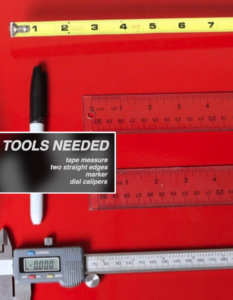
We manufacture, forge, and machine custom steel axles on-site in our Portland, Indiana, facility. But before we can chuck up the steel and cut your splines, we need the right specs. Getting the measurements right the first time guarantees a true plug-and-play install. Grab a tape measure, a straight edge or square, a marker, and a trusty pair of dial calipers. Here’s your definitive step-by-step guide to filling out the Moser Custom Axle Order Form.
Step 1: Identify Your Housing and Ends
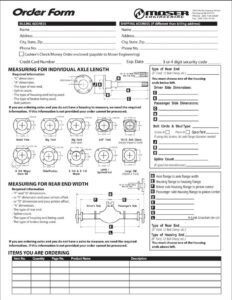
First, we need to know the foundation. Are you working with a Ford 9-inch, a GM 12-bolt, a Dana 60, or something else? Not sure about your existing housing type? Contact us for help.
Next, you need to positively identify your housing ends. Do not just ‘eyeball’ it by comparing your housing to the illustrations on the order form. Between year-to-year manufacturing variations and the high likelihood that previous owners welded on aftermarket ends, guessing is a recipe for disaster.
-
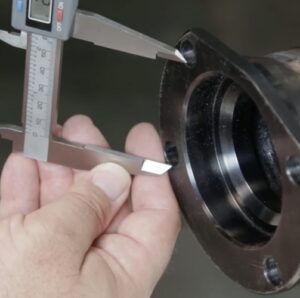
- Vertical Measurement
-
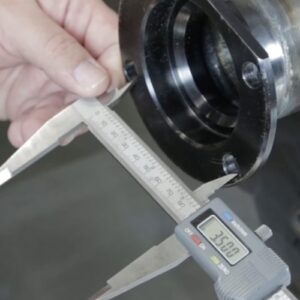
- Horizontal Measurement
-
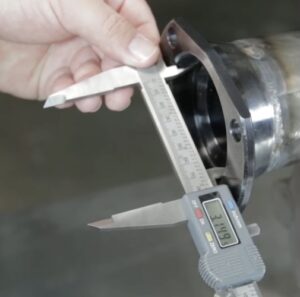
- Inside Diameter
The Fix: Measure the spacing between the bolt holes both vertically and horizontally, then compare those hard numbers to our form. For extra confirmation (if your axles are already out), use your dial calipers to measure the inside diameter of the opening where the bearing sits.
Step 2: Establish the Shaft Lengths (Dimensions C, K, and B)
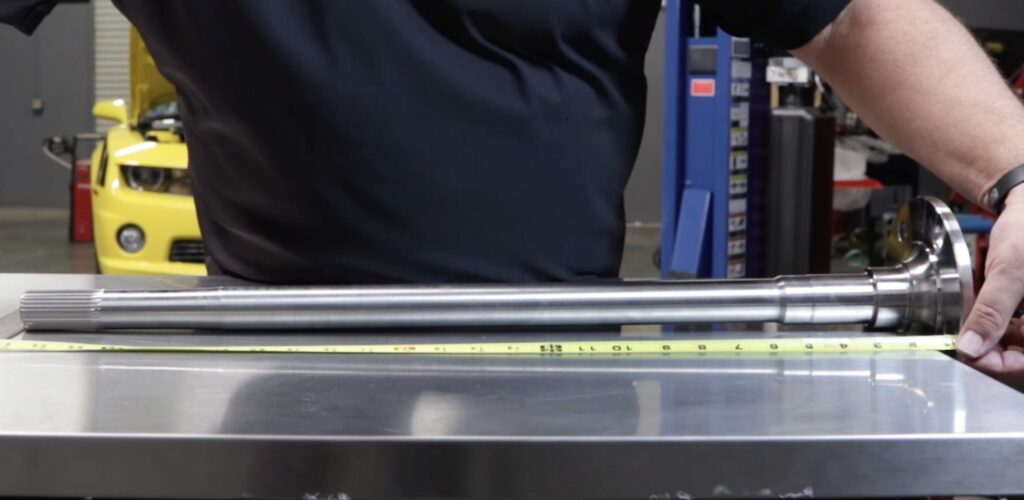
Dimension C
-
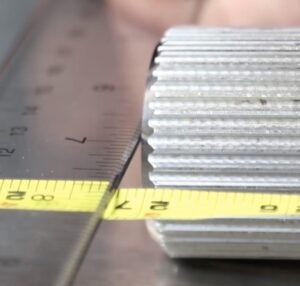
- Straight Edge
-
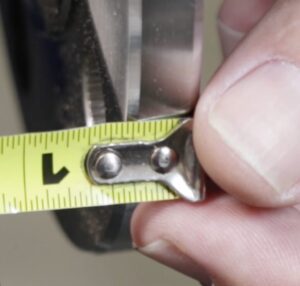
- Flat Outer Face
Because axle shafts are rarely the same length on both the driver and passenger sides, you’ll likely need to record these measurements for both.
Dimension C (Total Length): Measure from the outside face of the axle flange to the very end of the axle shaft. Use your straight edge across the shaft end to ensure accuracy. Note: Do not include the raised hub pilot in the center of the flange; measure strictly from the flat outer face as pictured above.
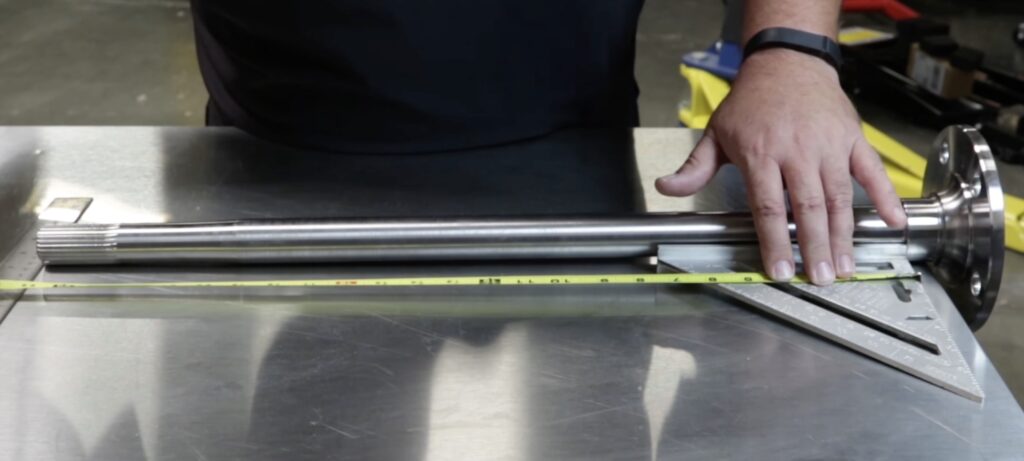
Dimension K
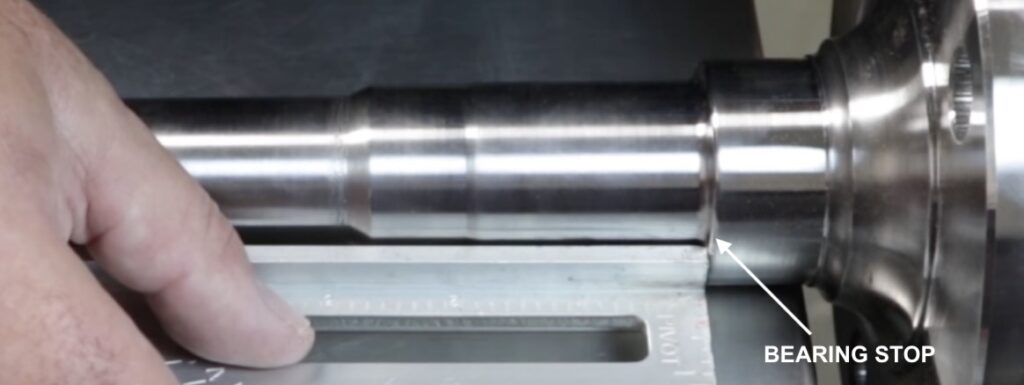
Dimension K (Bearing Stop to End): Measure from the inner edge of the bearing stop down to the end of the splined shaft. Make sure your straight edge is on the bearing stop itself, not the radius edge. Measuring from the radius can throw your numbers off by a 1/16th of an inch, which is enough to ruin your day during assembly.
Dimension B
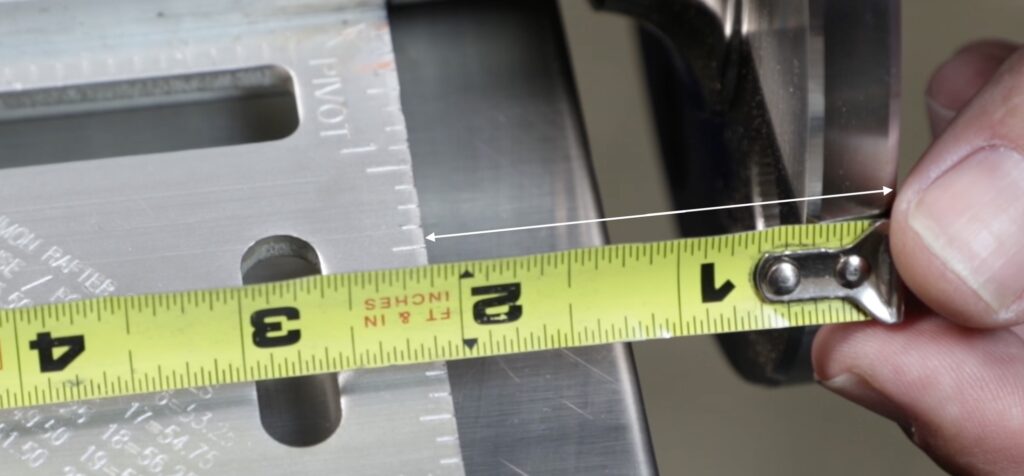
Dimension B (Flange to Bearing Stop): With the bearing removed, measure the distance from the outside of the axle flange to the inner edge of the bearing stop.
The Builder’s Double-Check: Add Dimension B and Dimension K together. The sum should equal Dimension C perfectly. If it doesn’t, re-measure.
Step 3: Dial Caliper Measurements (Dimensions J, A, and H)
For these critical fitment dimensions, switch to your dial calipers. Precision here ensures your brake hardware and wheels will actually fit.
-
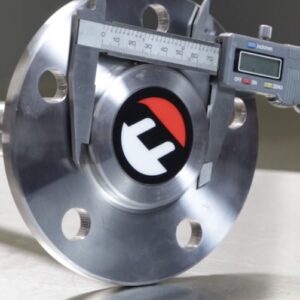
- Dimension J
-
- Dimension A
-
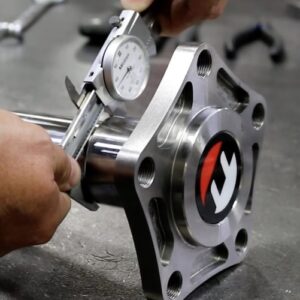
- Dimension H
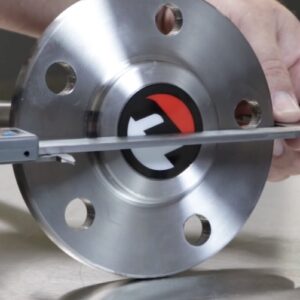
- Dimension J (Flange Outside Diameter): Measure the OD of the axle flange. This is especially vital for disc brake conversions so your new axles will clear your brake rotors.
- Dimension A (Hub Pilot Outside Diameter): Measure the OD of the hub pilot. This ensures the hub-centric fitment of your brake hats and wheels is dead-on.
- Dimension H (Bearing Seat): Measure the diameter of the axle shaft right where the bearing presses on.
Step 4: Splines, Studs, and Carrier Specs
Finally, spec out your power delivery.
- Spline Count: If you are matching an existing carrier, take a marker, mark one spline at the 12 o’clock position, and count your way around. If you are upgrading your carrier to handle massive torque, choose a higher spline count (like our track-proven 33, 35, or 40-spline options) and record that number instead. Bonus: We back our 33, 35, and 40-spline axles with a 10-year warranty against breakage at the splined end due to excessive horsepower.
- Wheel Studs: Note your required bolt circle (e.g., 5×4.5, 5×4.75) and whether you are utilizing press-in or screw-in threaded studs.
- Carrier Type: Always tell us exactly what carrier/spool you are running. We need to match the pressure angle of the axle splines precisely to your specific differential.
Let Us Help With Your Project
Building a bulletproof drivetrain shouldn’t keep your car on jack stands for months. Let us use our decades of track-proven experience to build you the exact parts you need, exactly when you need them.
If you get stuck while measuring, or if you aren’t quite sure what spline count or bearing setup your new combination requires, our engineering and customer service teams are staffed by current and former racers – and we’re just a phone call away at (260) 726-6689.
Ready to put the power to the ground? Download the custom order form, take your measurements, and let’s get your parts in the mill.